Valsugana, land of art
Painters and visions born among these valleys, from Gaigher to Senesi.
Where the landscape kindles the gaze
In the folds of Valsugana, a land of silent passages and shifting light, artists were born who knew how to look beyond appearances, giving back to the world visions that are intimate, powerful and deeply personal.
Let us meet some of them…
Orazio Gaigher
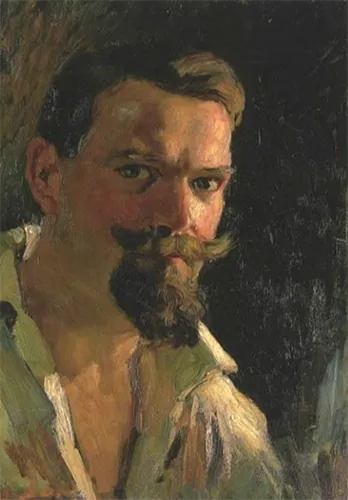
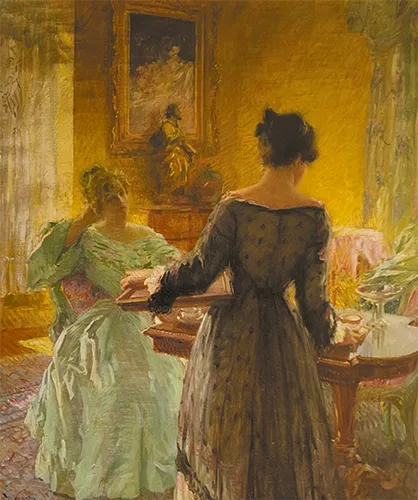
Orazio Gaigher, born at Barco di Levico in 1870, abandoned medicine to follow the call of painting. A cultured traveller, he brought to the canvas the luminous softness of French plein air, influenced by Renoir and by Central European impressionism. His female figures, as in Amiche al tè (1920-25), seem to emerge from a suspended time, immersed in quiet bourgeois atmospheres, while in his portraits and rural scenes his mastery of colour bursts forth.
Giuseppe Angelico Dallabrida
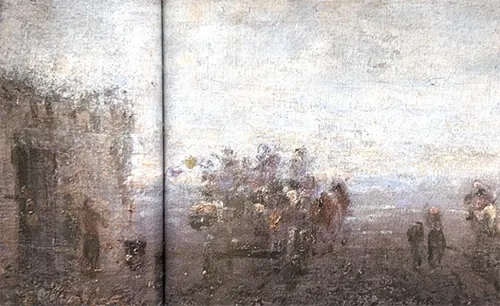
Beside him, and almost in counterpoint, moves the more restless and lyrical brushwork of Giuseppe Angelico Dallabrida, born at Caldonazzo in 1874. Far from academies and rhetoric, his painting becomes a whisper, an evocation. In his landscapes it is not the view that is sought, but the emotion: patches of colour vibrate and suggest more than they show. In Gli sfollati (1915-18), the drama of captivity dissolves into visual poetry. His is a painting made of silences and fades, evolving towards an almost abstract form in which the memory of Valsugana becomes pictorial matter.
Guido Polo
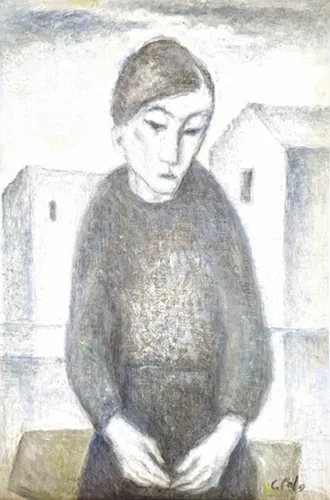
Another powerful voice is that of Guido Polo, born at Borgo Valsugana in 1898. His painting, matured between Munich and Trento, draws on Romanesque spirituality and on a spare, unclamorous modernity. Hollowed faces, eyes that do not seek the viewer but pass through them: in works such as Figura (1951) or Ritratto di donna a Burano (1976), he recounts ordinary life with an almost sacred intensity. In his watercolours and engravings, Trento becomes an inward reflection, a city of the soul rather than of the eye.
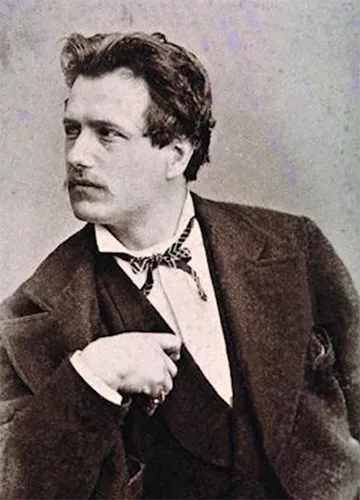
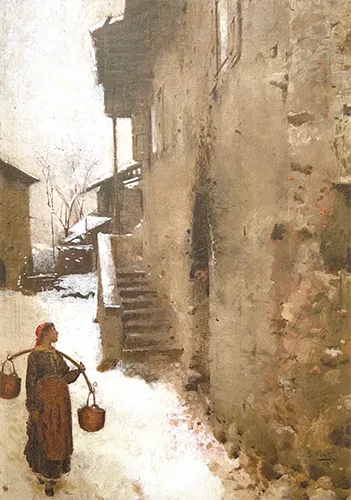
Eugenio Prati
No less inspired was Eugenio Prati, born at Caldonazzo in 1842 and a great chronicler of rural life in Trentino. With fresh, intimate brushstrokes he described the daily round of the peasants, the women at the fountains, the children in the courtyards, bringing to the stage the simple poetry of living. His portraits and landscapes are windows onto a world made of waiting, of silences, of light filtered through the leaves.
Tullio Garbari
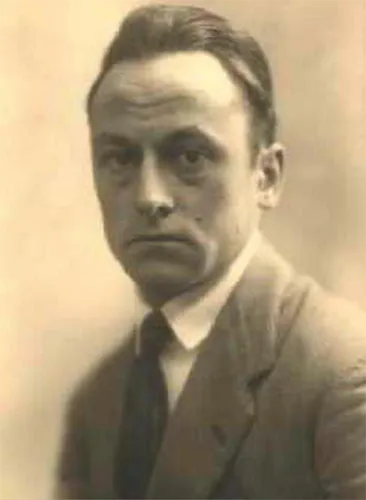
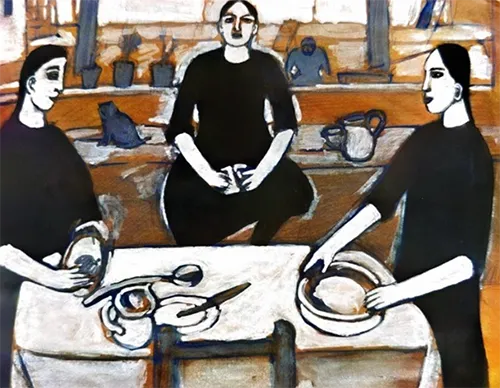
A wholly different energy runs through the work of Tullio Garbari, born at Pergine Valsugana in 1892 and a restless spirit of the early twentieth century. Religious disquiet and expressive tension mark his paintings, where faces turn hieratic and bodies recall the lines of the Gothic and of primitivism. A friend of Carlo Carrà and a participant in the European avant-gardes, Garbari built a visionary and strikingly modern language. He died young in Paris, leaving a brief but intensely concentrated body of work.
Luigi Senesi
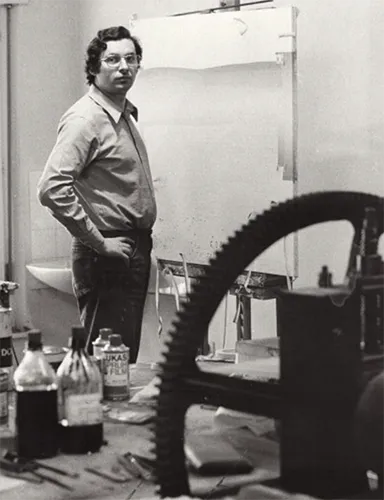
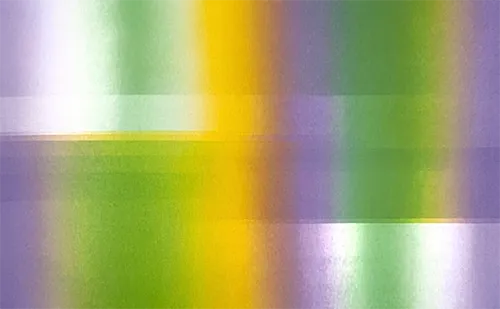
Closing this gallery of visions is Luigi Senesi, born in Trento in 1930 and died in 1990. A retiring and refined painter, he joined the abstract researches of the second half of the twentieth century, developing a painting that unites geometric rigour with chromatic vibrations of rare sensitivity. His canvases, often built through transparencies and glazes, evoke inner landscapes made of light and silence. An intense and solitary voice that left a luminous mark on the history of Italian abstract art.
Valsugana, land of art
Painters and visions born among these valleys, from Gaigher to Senesi.
Where the landscape kindles the gaze
In the folds of Valsugana, a land of silent passages and shifting light, artists were born who knew how to look beyond appearances, giving back to the world visions that are intimate, powerful and deeply personal.
Let us meet some of them…
Orazio Gaigher
Orazio Gaigher, born at Barco di Levico in 1870, abandoned medicine to follow the call of painting. A cultured traveller, he brought to the canvas the luminous softness of French plein air, influenced by Renoir and by Central European impressionism. His female figures, as in Amiche al tè (1920-25), seem to emerge from a suspended time, immersed in quiet bourgeois atmospheres, while in his portraits and rural scenes his mastery of colour bursts forth.
Giuseppe Angelico Dallabrida
Beside him, and almost in counterpoint, moves the more restless and lyrical brushwork of Giuseppe Angelico Dallabrida, born at Caldonazzo in 1874. Far from academies and rhetoric, his painting becomes a whisper, an evocation. In his landscapes it is not the view that is sought, but the emotion: patches of colour vibrate and suggest more than they show. In Gli sfollati (1915-18), the drama of captivity dissolves into visual poetry. His is a painting made of silences and fades, evolving towards an almost abstract form in which the memory of Valsugana becomes pictorial matter.
Guido Polo
Another powerful voice is that of Guido Polo, born at Borgo Valsugana in 1898. His painting, matured between Munich and Trento, draws on Romanesque spirituality and on a spare, unclamorous modernity. Hollowed faces, eyes that do not seek the viewer but pass through them: in works such as Figura (1951) or Ritratto di donna a Burano (1976), he recounts ordinary life with an almost sacred intensity. In his watercolours and engravings, Trento becomes an inward reflection, a city of the soul rather than of the eye.
Eugenio Prati
No less inspired was Eugenio Prati, born at Caldonazzo in 1842 and a great chronicler of rural life in Trentino. With fresh, intimate brushstrokes he described the daily round of the peasants, the women at the fountains, the children in the courtyards, bringing to the stage the simple poetry of living. His portraits and landscapes are windows onto a world made of waiting, of silences, of light filtered through the leaves.
Tullio Garbari
A wholly different energy runs through the work of Tullio Garbari, born at Pergine Valsugana in 1892 and a restless spirit of the early twentieth century. Religious disquiet and expressive tension mark his paintings, where faces turn hieratic and bodies recall the lines of the Gothic and of primitivism. A friend of Carlo Carrà and a participant in the European avant-gardes, Garbari built a visionary and strikingly modern language. He died young in Paris, leaving a brief but intensely concentrated body of work.
Luigi Senesi
Closing this gallery of visions is Luigi Senesi, born in Trento in 1930 and died in 1990. A retiring and refined painter, he joined the abstract researches of the second half of the twentieth century, developing a painting that unites geometric rigour with chromatic vibrations of rare sensitivity. His canvases, often built through transparencies and glazes, evoke inner landscapes made of light and silence. An intense and solitary voice that left a luminous mark on the history of Italian abstract art.